
The Complete Guide to PPAP Process Documentation
- carystraley
- 1 day ago
- 13 min read
The Production Part Approval Process remains the gatekeeper between prototype success and full production release in automotive and aerospace manufacturing. A single documentation error can halt production lines, delay customer shipments by weeks, and cost tens of thousands in rework. In practice, we see manufacturers who treat PPAP as a paperwork exercise rather than a systematic quality validation struggle with rejected submissions and strained customer relationships. The difference between a smooth approval and a costly rejection often comes down to understanding exactly what evidence your customer needs and how to present it correctly.
Table of Contents
Quick Takeaways
Key Insight
Explanation
PPAP submission level determines workload
Level 3 requires full documentation submission while Level 1 needs only a warrant, saving significant preparation time when approved by customer
Design Records drive everything
Without complete engineering drawings and specifications, every subsequent PPAP element becomes guesswork and increases rejection risk
First Article Inspection timing matters
Conducting FAI before process capability studies wastes resources if the process cannot hold tolerances consistently
CMM programming accuracy impacts approval
Measurement uncertainty must be factored into dimensional results, typically requiring gauge capability studies for critical features
Process Flow documentation proves control
Generic process flows get rejected, specific operation sequences with control methods and reaction plans demonstrate manufacturing readiness
Appearance approval requires physical samples
Digital images cannot substitute for actual parts when surface finish or color matching is critical to function
Interim approval expires without action
Temporary approvals typically last 6 months maximum, requiring corrective action completion or full resubmission
Understanding PPAP Requirements
The PPAP process exists because automotive manufacturers learned the expensive lesson that prototype success does not predict production consistency. AIAG developed the Production Part Approval Process standard to create a uniform submission format across the supply chain. When a Tier 1 supplier requires PPAP from their machining partner, they are asking for objective evidence that the manufacturing process can repeatedly produce parts meeting all design requirements.
The current PPAP standard, Fourth Edition, applies to all automotive production and service parts. Aerospace manufacturers often reference AS9102 for first article inspection, but many also require PPAP documentation for production releases. At SCPM, we maintain A2LA accreditation specifically because aerospace customers demand traceable calibration and measurement system validation beyond basic PPAP requirements.
Your customer determines the submission level, not the supplier. This decision depends on part complexity, criticality to safety, previous supplier performance, and whether the part represents a new design or process change. A common mistake is preparing Level 5 documentation when the customer specified Level 3, wasting engineering resources on unnecessary warrant retention.
When PPAP Submission Is Required
New part or product submissions always require PPAP. Correction of a discrepancy on a previously submitted part triggers resubmission. Engineering change notices affecting design records, specifications, or materials mandate updated PPAP packages. Process or tooling changes that could affect form, fit, or function require customer notification and typically new approval.
Production inactivity exceeding one year creates a new submission requirement at most OEMs. Sub-supplier or material source changes need documentation even when the manufacturing location remains constant. Active part production using corrected or refurbished tooling after significant wear or damage requires revalidation.
Pro tip: Maintain a PPAP trigger checklist specific to each customer's requirements, as submission criteria vary between automotive OEMs and their interpretation of the AIAG standard.
The 18 Elements of PPAP
The PPAP manual defines 18 specific documentation elements that build a complete quality case. Each element serves a distinct purpose in proving manufacturing readiness. Missing or incomplete elements guarantee rejection, while poorly organized submissions slow approval even when technically complete.
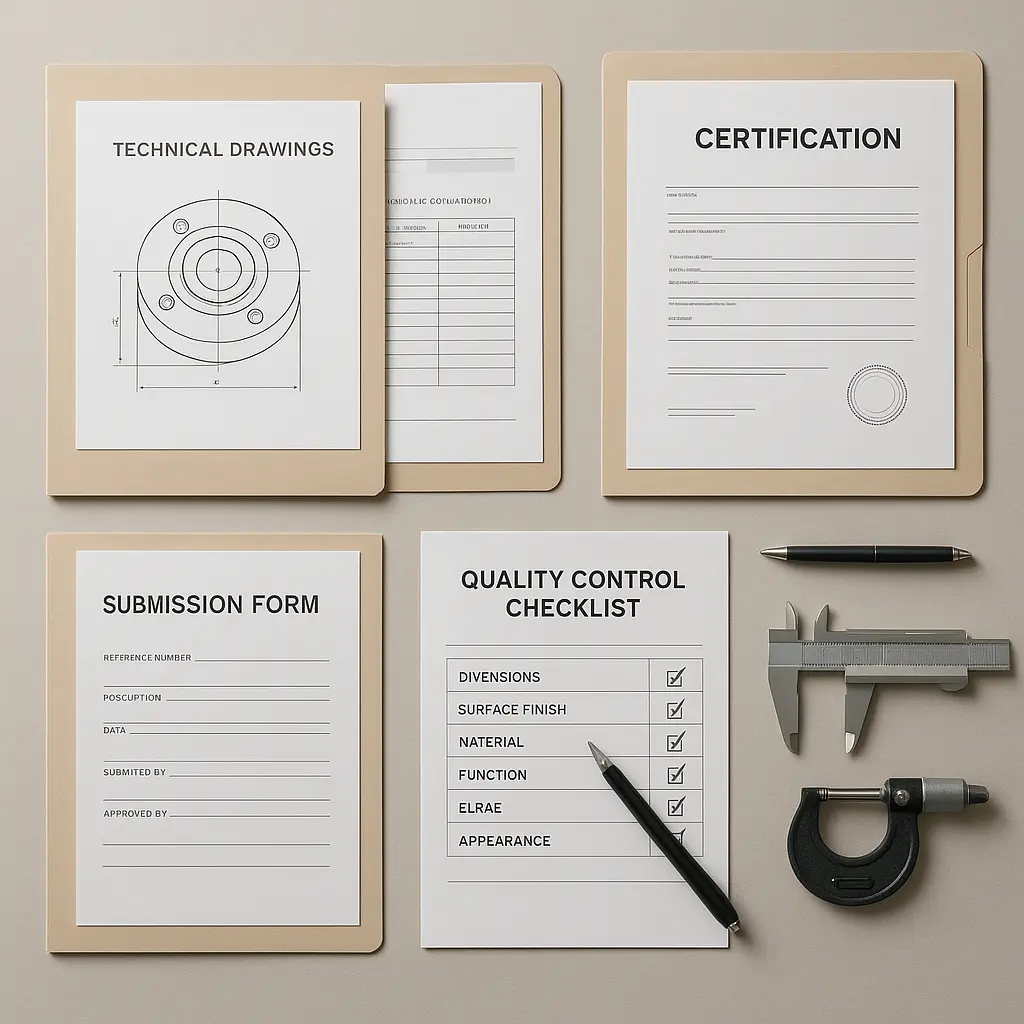
Design Records and Engineering Specifications
Element 1 covers all design records including engineering drawings, CAD models, specifications, and material callouts. This element fails when suppliers work from outdated drawing revisions or when customer-supplied models do not match print dimensions. We validate that our 5-axis CNC programming references the exact drawing revision specified in the PPAP package before cutting first articles.
Engineering change authorization must accompany any deviation from the design record. Suppliers cannot unilaterally decide that a tolerance is unrealistic or substitute materials without formal customer approval documented in the PPAP submission.
Engineering Change Documents
Element 2 requires all authorized engineering changes since the last submission. This creates traceability between what was previously approved and current requirements. The change history demonstrates that the supplier tracks and implements customer revisions systematically rather than working from unofficial redlines or verbal instructions.
Customer Engineering Approval
Element 3 shows that the customer formally approved the design if the supplier is responsible for engineering. This separates design authority from manufacturing responsibility. For most precision machining work, the customer owns the design and this element consists of the drawing approval signature block or transmittal documentation.
Design FMEA
Element 4 applies when the supplier has design responsibility. Design Failure Mode and Effects Analysis identifies potential failure modes in the product design before manufacturing begins. Most contract machining operations do not generate this element because they manufacture to customer-supplied designs.
Process Flow Diagrams
Element 5 requires a detailed process flow showing every manufacturing operation in sequence. Generic statements like "machine per drawing" fail this requirement. The flow must specify operation numbers, equipment used, and control characteristics measured at each stage. Our process flows for wire EDM operations identify wire type, dielectric fluid, speed settings, and in-process measurements taken before removing the part from fixtures.
Process FMEA
Element 6 identifies potential process failures and their prevention controls. This differs from design FMEA by focusing on manufacturing risks. A properly developed process FMEA for precision machining addresses tool wear, thermal expansion, fixture repeatability, and measurement error. The PFMEA drives control plan content by identifying which characteristics need statistical process control.
Control Plans
Element 7 links directly to process FMEA outputs. The control plan specifies which characteristics are measured, at what frequency, using which methods, and what reaction plans activate when results fall outside control limits. Prototype, pre-launch, and production control plans may differ in measurement frequency. Production control plans must reflect the actual process monitoring that will occur during serial production.
Pro tip: Cross-reference control plan line items to specific operations in your process flow diagram using matching operation numbers to demonstrate systematic process control.
Measurement System Analysis
Element 8 proves that measurement systems can detect variation in the manufactured parts rather than just showing measurement system noise. Gauge R&R studies using AIAG methodology are standard, with acceptance criteria typically requiring less than 30% of tolerance consumed by measurement system variation. Our CMM programming includes uncertainty budgets that account for probe qualification, temperature variation, and part fixture repeatability.
Attribute agreement analysis applies to visual inspection criteria like surface finish or cosmetic defects. These studies verify that multiple inspectors reach consistent accept/reject decisions using the same criteria.
Dimensional Results
Element 9 presents actual measurements from production parts, not prototype samples. The submission must include measurements for every dimension and specification on the drawing, organized in a format that clearly identifies what was measured and the results obtained. At SCPM, we generate dimensional layouts that group related features and note the inspection method used for each characteristic.
Dimensional results must come from parts produced using production tooling, production processes, and production materials. Running prototype tooling at reduced speeds to achieve better surface finish invalidates the PPAP submission because it does not represent production capability.
Material and Performance Test Results
Element 10 requires material certifications and any specified performance testing. Material certs must match the heat or lot used to manufacture the submitted parts. Performance testing covers functional requirements like pressure testing, electrical continuity, or load bearing as specified in design documentation. Test reports must show pass/fail criteria and actual results.
Initial Process Studies
Element 11 demonstrates statistical process capability for critical characteristics. The standard requires Ppk values, calculated from initial production runs before any process adjustments. Common mistakes include calculating Cpk instead of Ppk, using insufficient sample sizes, or cherry-picking favorable time periods. Capability studies require minimum 25 subgroups for attributes or 100 individual measurements for variables data.
When process capability falls below customer requirements, typically Ppk less than 1.33, suppliers must submit corrective action plans with interim containment measures. The data consistently shows that processes incapable during PPAP rarely improve in serial production without fundamental changes.
Qualified Laboratory Documentation
Element 12 applies when laboratory testing is required. The testing facility must demonstrate accreditation or qualification appropriate to the test method. Our MetroLab division maintains A2LA accreditation specifically to meet this requirement for customers requiring traceable dimensional inspection and calibration services.
Appearance Approval Report
Element 13 requires customer evaluation of parts where appearance matters for function or customer perception. This element needs physical master samples retained by both supplier and customer. Color, texture, grain, and gloss must be evaluated under specified lighting conditions. Digital photographs cannot replace physical appearance evaluation.
Sample Production Parts
Element 14 consists of actual parts manufactured during the production trial, not prototype samples. The quantity varies by submission level, but parts must represent the actual production process output. These samples undergo all downstream manufacturing operations including any customer-specified packaging or preservation requirements.
Master Sample
Element 15 establishes a retained standard for characteristics difficult to quantify numerically. This typically applies to cosmetic or sensory attributes. Both supplier and customer retain identified master samples for future comparison when production disputes arise.
Checking Aids
Element 16 covers functional gauges, fixtures, or templates used for inspection. When custom gauges validate critical features, those tools require their own qualification including gauge R&R studies. Our gauge manufacturing capabilities include documentation packages that satisfy Element 16 requirements when customers need dedicated inspection tooling.
Customer-Specific Requirements
Element 17 addresses additional documentation required by individual customers beyond the standard 18 elements. Ford, GM, and Stellantis each publish supplemental requirements. Aerospace customers often require AS9102 forms, material traceability, and special process certifications. This element fails when suppliers assume AIAG standard requirements are sufficient without checking customer-specific additions.
Part Submission Warrant
Element 18 is the single-page summary that accompanies every PPAP submission regardless of level. The PSW identifies the parts, submission level, reason for submission, and declares that all requirements are met. An authorized supplier representative must sign the warrant. This signature certifies that supporting documentation exists and is available for customer review even when not physically submitted.
"The Part Submission Warrant represents a legal declaration of compliance. Signing a PSW when supporting documentation is incomplete or inaccurate constitutes fraud and can result in supplier decertification or contract termination." - AIAG PPAP Manual, Fourth Edition
Submission Levels Explained
PPAP defines five submission levels that determine what documentation you send versus what you retain. The customer specifies the level, and suppliers cannot self-select a lower level to reduce workload. Understanding these levels prevents wasted effort preparing documentation that will not be reviewed.
Submission Level
Documentation Sent to Customer
Best Used When
Level 1
Part Submission Warrant only, retain all other documentation
Low-risk parts, proven supplier, minor engineering changes
Level 2
PSW with product samples and limited supporting data
Customer wants to inspect parts but trusts documentation exists
Level 3
PSW with product samples and complete supporting data
New suppliers, new parts, significant process changes
Level 4
PSW and other requirements as defined by customer
Customer specifies exactly which elements to submit
Level 5
PSW with product samples and complete supporting data reviewed at supplier location
Complex parts, new technology, or supplier development situations
Level 3 submissions represent the majority of PPAP packages in automotive manufacturing. This level requires organizing and transmitting complete documentation sets, often exceeding 100 pages for complex machined components. The submission must be organized logically with a table of contents that matches the 18-element structure.
Level 1 submissions save significant time but require maintaining organized files ready for customer audit. We have seen customers elevate submission levels or request full documentation during audits when Level 1 warrant signatures prove unsupported by actual records.

Documentation Preparation Process
Successful PPAP preparation follows a methodical sequence that builds documentation in logical order. Starting with dimensional inspection before establishing process capability wastes resources because incapable processes require corrective action that changes the process, invalidating early measurements.
Pre-Submission Planning Phase
Review the customer purchase order for specified submission level and any special requirements. Verify you have current drawing revisions and engineering specifications. Identify all critical and significant characteristics that will require capability studies and enhanced measurement system analysis. Calculate the sample size needed for capability studies based on production volume and measurement frequency.
Schedule production trials with sufficient time for corrective action if initial results show process instability or inadequate capability. A common mistake is scheduling PPAP production runs immediately before customer deadline with no buffer for problems. In practice, complex machined parts requiring first article inspection need minimum two weeks from production trial to submission.
Production Trial Execution
Run the production trial using actual production conditions, not optimized prototype settings. This means production speeds, standard tooling, normal operators, and typical material lots. Document any process interruptions, tool changes, or adjustments during the run. Collect samples systematically across the production run rather than cherry-picking favorable parts.
Measure all characteristics on every part during initial production to build statistical data sets. This level of inspection during production trials exceeds what occurs in serial production but provides the data needed for capability analysis and dimensional results documentation.
Data Analysis and Gap Identification
Calculate process capability indices immediately after production trials. Identify any characteristics showing Ppk below customer requirements, typically 1.33 minimum. Failed capability studies require root cause analysis and corrective action before PPAP submission. Submitting with known capability issues only works when the customer grants interim approval with specific corrective action deadlines.
Complete measurement system analysis for all gauges and inspection methods used during production. Validate that dimensional results use qualified measurement systems. This sequence catches measurement problems before finalizing dimensional layouts.
Documentation Assembly
Organize documentation following the 18-element structure with clear section dividers. Create a detailed table of contents listing each element with page numbers. Include a document revision table showing version control for the PPAP package itself. Cross-reference related documents using consistent part numbers and revision levels throughout the package.
Generate the dimensional layout in a format that clearly presents measured values against specified tolerances. We use automated CMM reporting that extracts measurements directly from inspection programs, reducing transcription errors common in manual layouts.
Pro tip: Create a PPAP preparation checklist specific to your most common part types, including customer-specific requirements, to ensure consistent documentation quality across submissions.
Common Rejection Reasons
Most PPAP rejections result from incomplete documentation, not technical part failures. Understanding common rejection patterns allows you to validate completeness before submission rather than learning from customer feedback.
Design Record Discrepancies
Dimensional results that reference drawing revision A while the design record shows revision B create automatic rejection. Customer engineering approval dates that precede drawing revision dates indicate version control problems. Material specifications on the PSW that do not match drawing callouts require clarification even when the material meets performance requirements.
Incomplete Measurement Coverage
Dimensional results missing any drawing specification guarantee rejection. This includes obvious dimensions like overall length and easily overlooked requirements like chamfer angles or radius blends. Surface finish specifications require measurement documentation, not just process control statements. Geometric dimensioning and tolerancing callouts need actual CMM results showing form, orientation, and location errors.
Invalid Statistical Analysis
Capability studies using fewer than 25 subgroups get rejected for insufficient data. Calculating Cpk when the standard requires Ppk shows misunderstanding of initial process studies. Capability indices exceeding 3.0 often indicate measurement problems rather than exceptional process control and trigger customer investigation.
Uncalibrated Measurement Equipment
Dimensional results from gauges or CMMs past calibration due dates invalidate the entire measurement data set. Calibration certificates that do not trace to NIST or equivalent national standards fail accreditation requirements. Missing uncertainty statements on calibration reports prevent proper measurement system analysis.
Incomplete Process Documentation
Generic process flows that could apply to any part rather than specific operation sequences demonstrate inadequate process definition. Control plans missing reaction plans for out-of-control conditions show incomplete process control strategy. Process FMEA documents that list no high-risk failure modes suggest inadequate analysis rather than perfect processes.
Mismatched Submission Level
Sending only a warrant when the customer specified Level 3 documentation creates immediate rejection. Including documentation elements not required for the specified level wastes review time but typically does not cause rejection. The Part Submission Warrant must accurately reflect what documentation accompanies the submission.
Software vs Manual Documentation
PPAP software packages promise faster documentation assembly and better organization compared to manual methods using spreadsheets and word processors. The decision between dedicated software and manual processes depends on submission volume, part complexity, and customer requirements for specific formats.
Approach
Advantages
Limitations
Dedicated PPAP Software
Automated data population, enforced completeness checks, version control, electronic submission capability
Software cost, learning curve, may not support customer-specific formats, requires data integration with inspection equipment
Manual Documentation
Zero software cost, complete format flexibility, no training required, works with any customer format
High labor content, transcription errors, difficult version control, inconsistent quality between submissions
Hybrid Approach
Use software for data-intensive elements like dimensional results while maintaining manual control of process documentation
Requires maintaining two systems, potential for inconsistencies between software-generated and manual sections
In practice, high-volume suppliers submitting dozens of PPAP packages annually benefit from software automation. Low-volume precision machining operations producing custom parts with infrequent PPAP submissions often find manual documentation more practical. At SCPM, we maintain both capabilities, using automated dimensional reporting from our CMM programming while manually developing process FMEA and control plans tailored to specific part requirements.
The critical factor is not which method you use but whether the output meets customer requirements completely and accurately. Software cannot compensate for inadequate process understanding or incomplete measurement data.
Frequently Asked Questions
What is the difference between PPAP and first article inspection?
First article inspection validates that initial production parts match design requirements through complete dimensional verification. PPAP encompasses first article inspection as Element 9 but adds 17 additional elements proving the manufacturing process is capable, controlled, and documented. FAI answers whether you made the part correctly once, while PPAP demonstrates you can make it correctly repeatedly. Aerospace customers often require both AS9102 first article inspection reports and PPAP documentation for production releases.
How long does PPAP approval typically take?
Customer review time varies from one week to two months depending on submission completeness, part complexity, and customer workload. Complete, well-organized Level 3 submissions typically receive approval within two to three weeks. Incomplete submissions return immediately for correction, restarting the review clock. Interim approval for parts with known issues but acceptable containment plans may occur within days when production urgency exists. Building four to six weeks into your project timeline between PPAP submission and required production start date prevents schedule pressure.
Can you submit PPAP before process capability studies are complete?
Submitting PPAP without completed capability studies for critical characteristics violates the standard and guarantees rejection. You can request interim approval when process capability falls short of requirements if you provide a detailed corrective action plan with specific completion dates and interim containment measures. Some customers allow submission with process capability studies in progress if you clearly identify this status on the Part Submission Warrant and commit to completion dates. Never misrepresent incomplete data as meeting requirements, as this constitutes fraudulent submission.
What happens if my PPAP submission gets rejected?
The customer identifies specific deficiencies requiring correction before resubmission. Address each rejection reason with corrective action, not just revised paperwork. Resubmit only the corrected elements unless the customer requests a complete new package. Track rejection reasons to identify systematic documentation problems requiring process changes. Multiple rejections for the same part damage supplier credibility and may trigger enhanced oversight or supplier development requirements. Severe or repeated documentation failures can result in supplier rating reductions affecting future business.
Do I need new PPAP for parts made in a different facility?
Manufacturing location changes require new PPAP submission even when using identical processes and equipment. The new facility must demonstrate its own process capability, measurement system validation, and process controls independent of the previous location. You can reference some documentation like design FMEA if the design has not changed, but all process-related elements require new data from the new facility. Customer notification of manufacturing location changes is mandatory, and production from the new site cannot begin until PPAP approval is granted.
How do you maintain PPAP compliance during serial production?
Execute the production control plan exactly as documented in the PPAP submission. Any deviation from documented inspection frequency, control methods, or reaction plans creates non-compliance. Maintain control charts for characteristics requiring statistical process control and document all out-of-control events with corrective actions. Keep calibration current on all measurement equipment used for PPAP characteristics. Notify customers immediately when process changes, tooling modifications, or supplier changes occur that might affect form, fit, or function. Annual internal audits of PPAP compliance identify documentation drift before customer audits discover problems.
What specific PPAP documentation challenges have you encountered in precision machining applications, and what solutions worked for your situation?